
Embracing API-First
Embracing API first mindset to build Powerful Platform Products

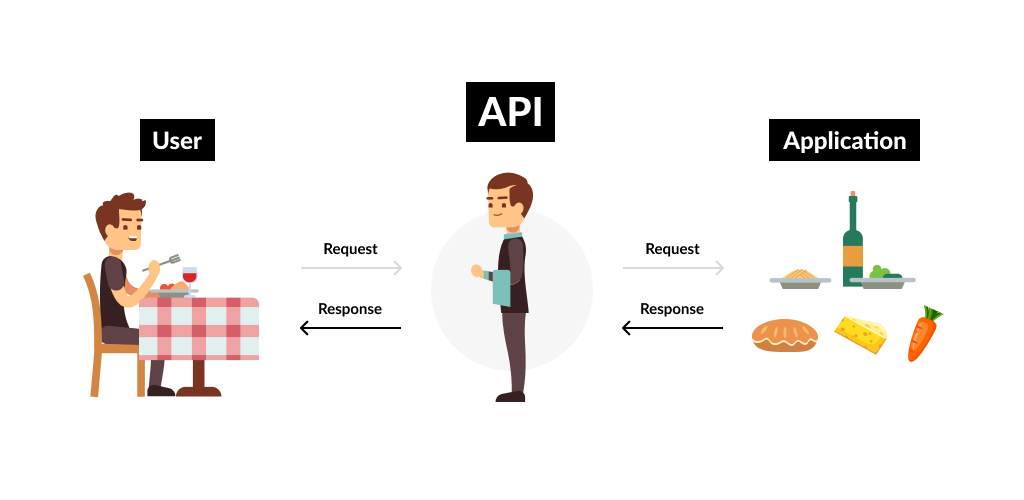
If you are developing platform products, You may have heard this term multiple times that we are API-first platform, if not yet, believe me someone soon mention this to you. In this article we’re going to dive deep into what it means to be API-first, the role of UI/UX, how to gather requirements, and the steps to plan and execute your product. I’ll share some real-world examples and analogies to keep things clear and fun. Ready? Let’s go!
Lets Talk about APIs
APIs, or application programming interfaces, have been around for a long time. Think of them as the translators that help different software applications chat with each other. They started out just helping programs share information, and they still do that today, quietly working behind the scenes to make sure your computer, phone, and all those smart gadgets play nicely together.
APIs are protocol which allows different softwares to communicate and exchange data
But here's the fun part: APIs have grown up significantly Over the past decades, they've gone from being just a translator to the actual building blocks of modern software and business. Whether you're looking at tech giants like Amazon and Netflix, or a mobile phone in your hand made by either apple or google, or a grocery store next to you everything is running via APIs.
This big shift reflects new reality: User demand a consistent, seamless experience that span many devices, places. While companies focused on fulfilling these user demands by providing a comprehensive ecosystem, leading to every business turning into a software company.
What Does It Mean to Be API-First?
Being API-first is like designing your dream home by first setting up the plumbing and electrical systems before putting up the walls. It means your platform’s backbone – the APIs – are designed, developed, and perfected first. These APIs are then used by various clients, including web, mobile, and other services.
Think of it like building a Lego city. The APIs are the standard blocks you use to construct buildings, roads, and bridges. They provide a consistent, reliable foundation, ensuring everything fits together perfectly, no matter how complex the final structure becomes.

In the API-First methodology, the initial step involves crafting and refining APIs before commencing the development of any application code. These meticulously designed APIs serve as the bedrock for constructing user-facing functionalities when creating the product. Moreover, if these APIs are made available to external users, they can also harness their capabilities. This illustrates the versatility of APIs, which can accommodate the needs of both internal and external stakeholders seamlessly.
For instance, consider Amazon's selling partner APIs. By adopting the API-First approach, Amazon's development team diligently designs and develops these APIs whenever a new work area is identified. These APIs empower selling partners to programmatically access a wealth of data pertaining to orders, shipments, payments, and more. Interestingly, Amazon also aims to offer similar functionalities to sellers accessing the Amazon portal. In achieving this, the portal's development team leverages the same APIs to create user-friendly features. This exemplifies how a single set of APIs can cater to the requirements of diverse user groups within and outside the organization.
Why API-First?
Adopting an API-first development model affords significant benefits for both developers and organizations.
Increasing Developer Productivity: When organizations adopt an API-first development model, developers and product teams see an increase in productivity through faster collaboration across the entire API lifecycle. In this approach, API work is centralized, reducing duplication, wasted effort while making mock servers, environment, document easily accessible.
Improving Software Quality: The value of API-first for developers—enabling developers to produce more powerful, resilient software in less time—translates directly to improved quality.
Simplifying Compliance and Governance: In an API-first approach, you have the discoverability and observability present as a default part of your operations, reducing the friction associated with responding to regulatory requirements and inquiries.
Providing a Solid API Security Perimeter: An API-first security perimeter offers enhanced security through centrally defined security measures applied throughout the API development lifecycle.
API-First as a Competitive Advantage: Organizations that embrace API-first approaches gain a competitive advantage by leading innovation and shaping business trends globally.
The Role of UI/UX in API-First Products
When we think about API, we think of block of codes and some CLI. One might wonder, "If we’re focusing on APIs, where does UI/UX fit in?" Great question! UI/UX is still crucial in an API-first approach and there maybe multiple level of UI/UX required depending on user and user’s user. While APIs form the backbone of platform products, UI/UX remains crucial for ensuring a positive experience for both developers and end-users. APIs may represent the hidden infrastructure of a city, but UI/UX serves as the face that interacts with users directly.
For API-first products, UI/UX focuses on how developers interact with your APIs and how the end-users experience the products built on those APIs. Good UI/UX ensures that your API documentation is clear, your developer portal is intuitive, and the end products such as web apps are user-friendly (This is mostly ensured by your users while building applications for end-customer).
Approaching Requirement Gathering
Gathering requirements for an API-first product is a bit like being an psychologist meeting with a family to help with their problem. You need to understand not just what is their concern, but also how they interact, where they work, what they do after work, how many kids they have, etc.. It’s about seeing the whole picture.
Stakeholder Interviews: Talk to everyone – developers, end-users, business stakeholders. Understand their pain points, needs, and desires.
User Stories and Use Cases: Write detailed user stories from both the developer and end-user perspectives. How will a developer use your API? What will be their use-case? what functionality they will be building? How their end-user will consume the product?
Technical Requirements: Define the technical needs. What are the performance requirements? What security measures are necessary? What data will be transferred? How much load you expect?
Planning and Execution
With requirements in hand, it’s time to move on to planning and execution. This is where the rubber meets the road.
Designing Your API:
RESTful or GraphQL: Choose the right type of API based on your use case. REST is great for standard CRUD operations, while GraphQL offers more flexibility in querying data. Rely on your developers to identify right type. This decision may have long lasting impact so ensure that development team understands platform goals, objectives.
Versioning: Plan for future changes. Implement versioning from the start to avoid breaking changes down the line.
Documentation: Invest in comprehensive, easy-to-understand self-help documentation. Define how a developer will access this documentation? will it require any special role?
Building the API:
Development: Let developers do the magic, while keep engaged during process! Ensure that you use best practices like consistent naming conventions, error handling, and testing.
Testing: Test your API thoroughly. Automated tests, integration tests, and user acceptance tests are your friends.
Launching and Iterating:
Soft Launch: Release your API to a select group of developers first. Gather feedback and make necessary adjustments.
Full Launch: Once polished, launch your API to the wider audience.
Continuous Improvement: APIs are not a set-and-forget deal. Keep improving based on user feedback, changing requirements and additional use-case you identify from end-user perspective.
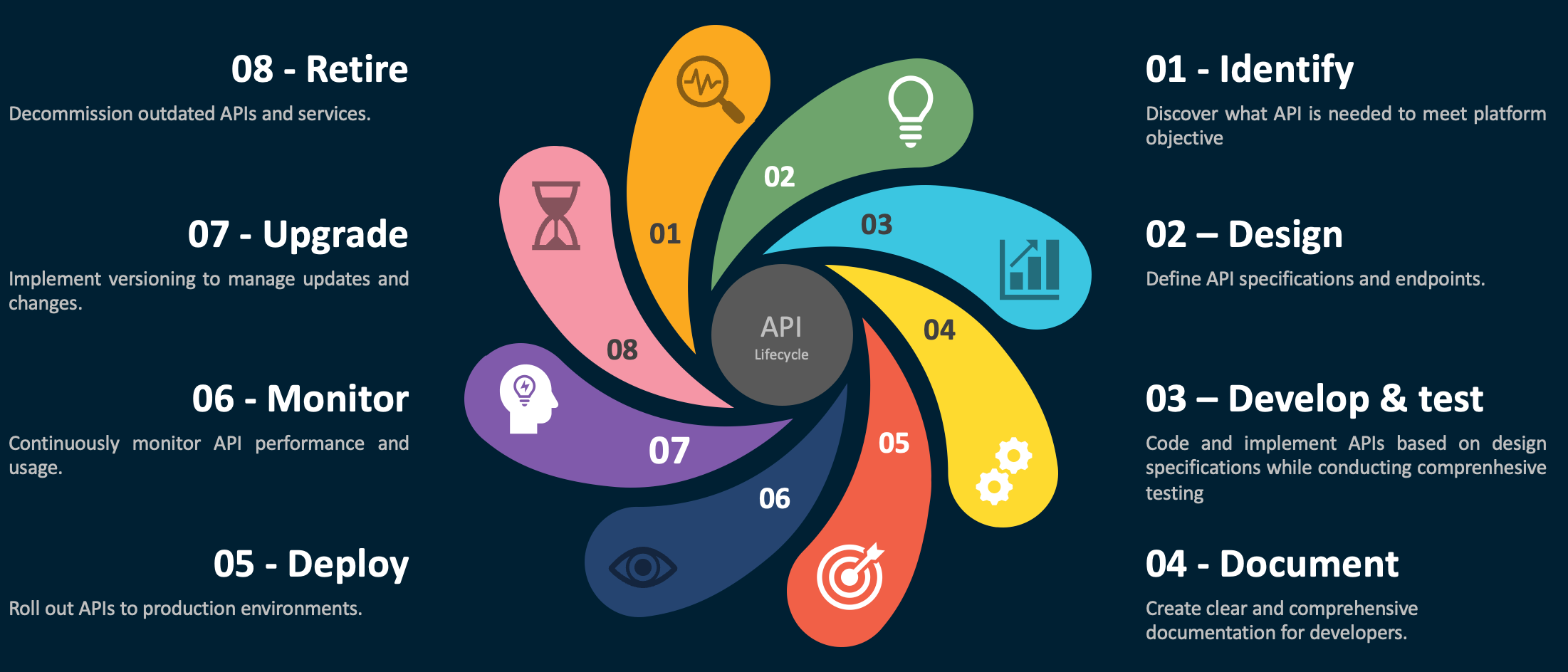
Understanding the API Lifecycle
A well-defined API lifecycle is essential for effective governance and management across various teams. Here's an overview of the API lifecycle, comprising eight stages:
Real-World Example: Stripe
Consider Stripe, a company that epitomizes the API-first approach. Stripe provides payment processing APIs that seamlessly integrate into various applications, from e-commerce sites to subscription services.
API-First Approach: Stripe’s entire business model revolves around their APIs. They prioritized building robust, flexible, and easy-to-use APIs that developers could integrate into various applications – from e-commerce sites to subscription services.
Developer Experience: Stripe places immense emphasis on the developer experience. Their documentation is top-notch, with clear examples and a comprehensive guide. They also offer an intuitive developer dashboard.
End-User Experience: By focusing on APIs first, Stripe ensured that their front-end products, such as checkout forms, are seamless and user-friendly, guaranteeing satisfaction for both developers and end-users.
Analogies to Bring It Home
To further cement the concept, let’s use some analogies:
Building a Car: Imagine building a car. The engine, transmission, and electrical systems are your APIs – the core functionalities. The UI/UX is the sleek design, comfortable seats, and intuitive dashboard. Both are essential, but the car won’t run without the internal systems.
Restaurant Kitchen: Think of an API-first approach like setting up a restaurant kitchen. The kitchen is designed to efficiently handle orders (APIs) before the dining area is set up (UI/UX). The chefs (developers) need a well-organized kitchen to prepare meals efficiently, ensuring customers get a great dining experience.
Embracing an API-first approach is about laying a solid foundation that supports everything else you build. It prioritizes flexibility, scalability, and a consistent developer and user experience. Remember, while APIs are the backbone, UI/UX is the face that interacts with users, and both need to work in harmony.
Gather your requirements thoroughly, plan meticulously, and execute with precision. Look to successful examples like Stripe for inspiration and keep iterating based on feedback. With these strategies, you’ll be well on your way to building powerful, API-first platform products that delight both developers and users.
So, next time you start a product development, think APIs first!